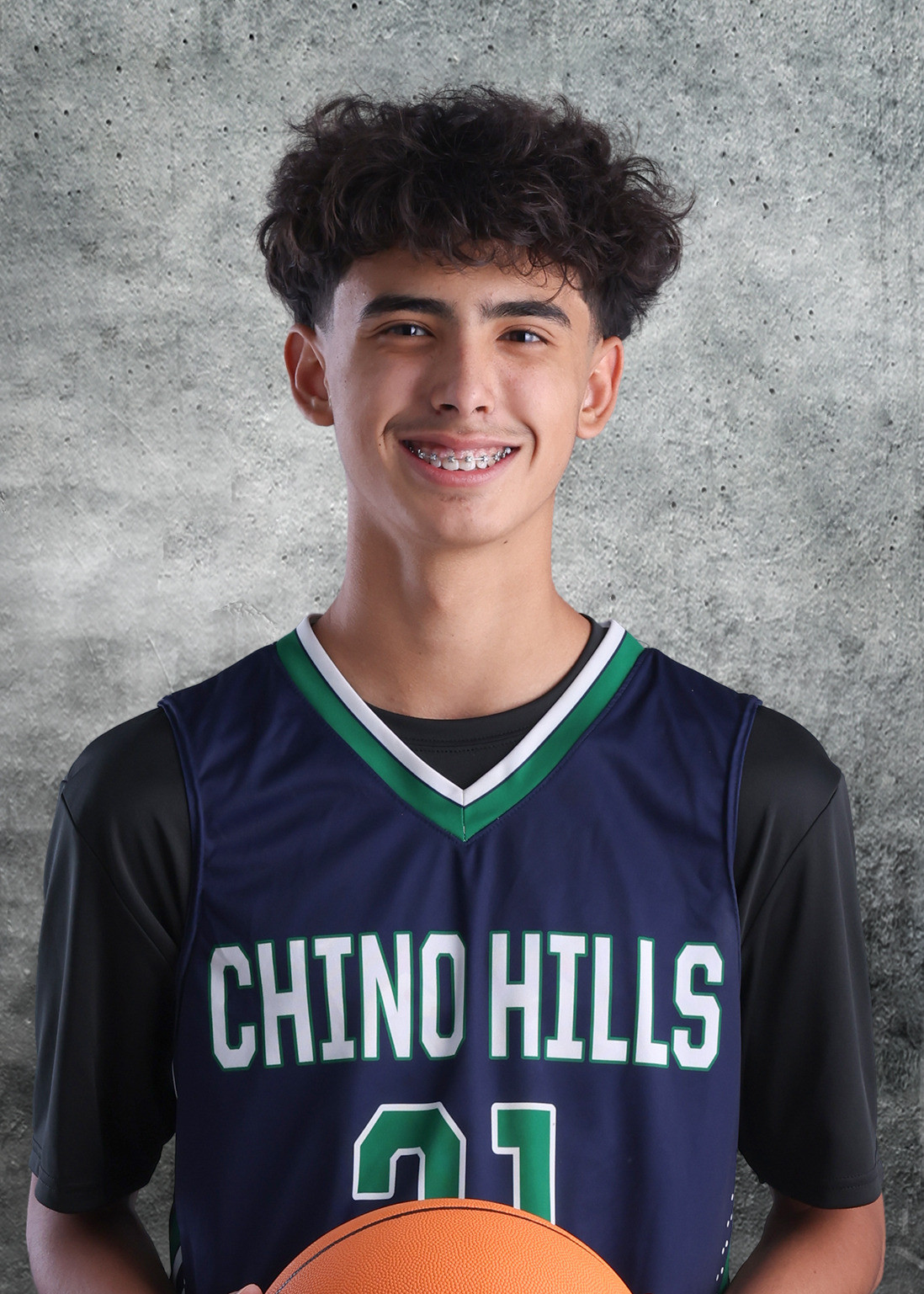
Career Overview
Sebastian is now operating at the Varsity level, and through two games, the early returns are genuinely encouraging.
Sebastian is now operating at the Varsity level, and through two games, the early returns are genuinely encouraging. He is averaging 8.5 points, 2.5 rebounds, and 3.5 assists per game at Varsity, with his most striking number being his three-point shooting — he has connected on 4 of 5 attempts from deep across both outings for an 80% clip. That figure is a small sample, but it is consistent with a direction rather than a fluke. In his Varsity debut against Ontario Christian — a five-point game in a close, meaningful environment — he posted 8 points, 3 assists, and 2 steals while shooting efficiently from both two and three-point range, with his only blemish being 2 turnovers against 3 assists. The follow-up against Colony, a more comfortable 19-point win, was arguably cleaner in execution: 9 points on 3-of-3 shooting from three, 4 assists, and zero turnovers. His 2-point attempts at Varsity have been limited — just 4 total across both games, connecting on only 1 — which means his interior efficiency has not yet been tested at this level. The assist numbers are trending in the right direction for a point guard, and his turnover rate has improved from game one to game two. Two games is a thin sample, but Sebastian has shown he can compete in a Varsity setting without being overmatched.
His path to this point is worth understanding as context. Across 21 Freshman-level games, Sebastian averaged 9.4 points, 3.8 rebounds, 2.8 assists, and 2.3 steals per game, with shooting splits of 54% on two-point attempts and 39% from three. His freshman season demonstrated real scoring range, including a 21-point, 10-rebound performance against Centennial in a competitive game and a 15-point outing in a close three-point win over Centennial in a separate contest, as well as a 15-point, 4-steal line against Santiago in a blowout. However, many of his stronger statistical games at the Freshman level came against overmatched opponents in blowout conditions — the 99-15 win over Southland, the 66-4 win over DRHS, and similar matchups — which tempers some of the volume-scoring conclusions. His most reliable evaluation windows at that level were his competitive games, where he demonstrated both scoring punch and defensive awareness before being moved up. At JV across 8 games, Sebastian averaged 8.0 points, 4.1 rebounds, 2.4 assists, and 1.9 steals per game, with two-point efficiency jumping to 71% on a smaller volume of attempts. His JV sample was again mixed in terms of competition quality — tournament blowouts padded some lines — but close games against Rancho and Upland revealed his best multi-category production, particularly an 18-point, 87.5% interior shooting performance against Rancho in a three-point loss that remains the clearest look at his upside in a genuinely contested environment. His three-point shooting dipped to 29% at JV, and he went 0-for-3 from the free throw line across that stretch, two data points that warrant attention. Each level has surfaced the same core identity: Sebastian is a two-way player who defends in passing lanes, distributes without losing the ball, and can score in bunches when his shot is on — but both his interior finishing under pressure and his free throw habits need continued development.